Notes from Dweb Camp: building the Democratic Tech Fund with a wider community
FKI, together with the wider Democratic Tech Fund (DTF) network, spent almost a week at Dweb Camp in Germany. Here is a report from the ground.
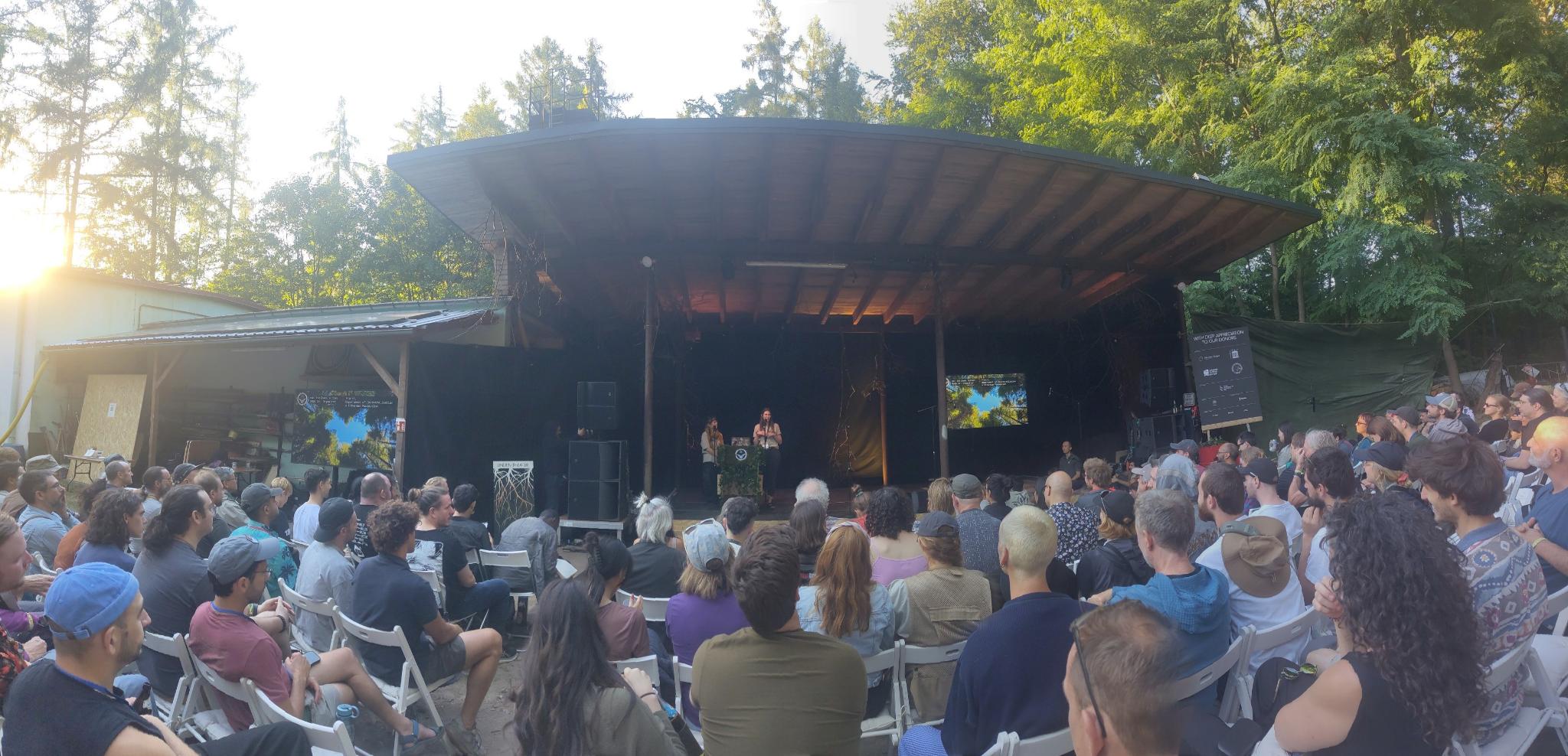
We recently joined Dweb Camp, the annual gathering organised by the Dweb organisation and the Internet Archive, this year held for the first time in Europe. It brought together an extraordinary mix of people working on decentralised, community-owned alternatives to the extractive tech of BigTech platforms. For FKI and the wider DTF network — Commons Network, Fundación Platoniq/Goteo.org, the Civic Interaction Design lab at the Amsterdam University of Applied Sciences, and many others — this was a chance to present the DTF prototype to a broader international community, and to take the next concrete steps together.
A camp built by its own community
The event took place at Alte Hölle (“Old Hell”), a forest site in the former East Germany that was once used by the Stasi and is now run as a self-organised collective of artists and hackers. Around thirty people live there year-round, supported by a much wider community, and the site is regularly opened up to likeminded collectives for festivals and hacker camps.
Getting there was already part of the experience: a bus organised by SoliBus, a volunteer collective that provides transport for antifascist and antiauthoritarian movements, carried us from Berlin to the camp. Conversations started before we even arrived — people from Transition Towns in Portugal, from the agroecology movement, and from collective funding initiatives such as FLOAT were all on board.
On site, some of us pitched tents while others took up ready-made glamping tents. Sessions ran across several venues — the main event tents, the hotel building, the “AI Barn” and the “Forest Pavilion” among them. The opening session, led by Wendy, mai and Brewster from the Dweb team, set the tone by asking everyone to get to know their neighbours and share why they had come.
The camp ran on its own volunteer infrastructure. Well over a hundred people signed up through LinkedOut, a volunteer coordination platform (no relation to LinkedIn), to take on tasks from washing dishes to setting up chairs. Each evening, small “weaving groups” gathered after dinner to reflect on the day and decide together what to discuss next.
Presenting and prototyping the DTF
Why had we come? To bring the community building the Democratic Tech Fund together with this wider network, and to co-create its next steps. Since a working session at Internet Archive Europe’s Amsterdam headquarters in February (see this thread), the DTF had moved from concept into prototype. Dweb Camp was the moment to present that prototype and invite people to join the next phase, as the fund prepares to go live (session). 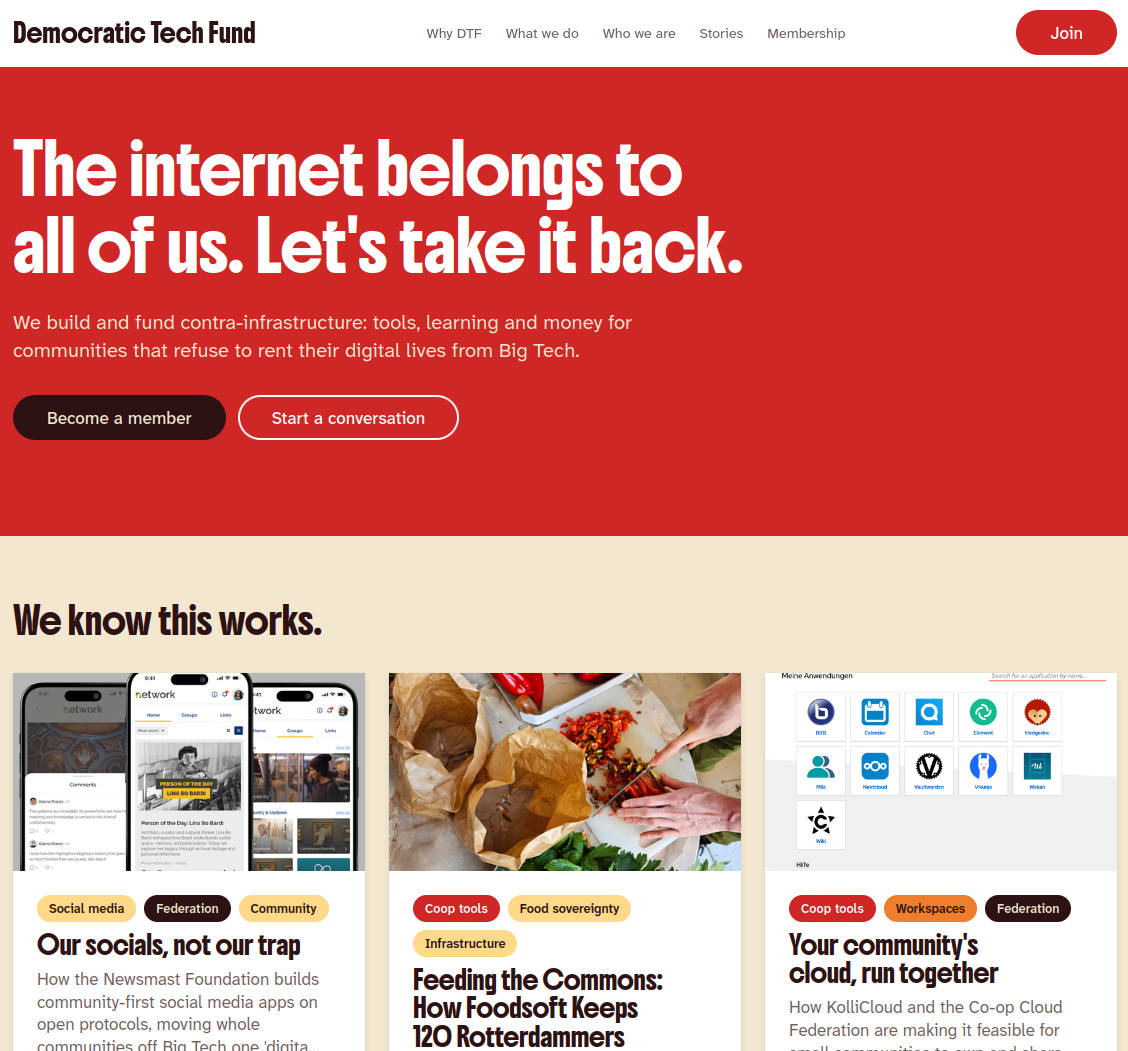
We were joined by Sophie from Commons Network, Olivier from Fundación Platoniq/Goteo.org, Martijn from the Civic Interaction Design research group, several people from the Co-op Cloud Federation, Ela and Andreas from Platform Coops Germany, Michael from Newsmast Foundation, and many others we expect to keep working with closely.
On Thursday, the new DTF website launched with a short session addressing the basics: why the fund exists, what “Democratic Tech” means, the problem it is trying to address, how it works, and who it is for. By the end, people at least had a clear answer to what the acronym stands for. 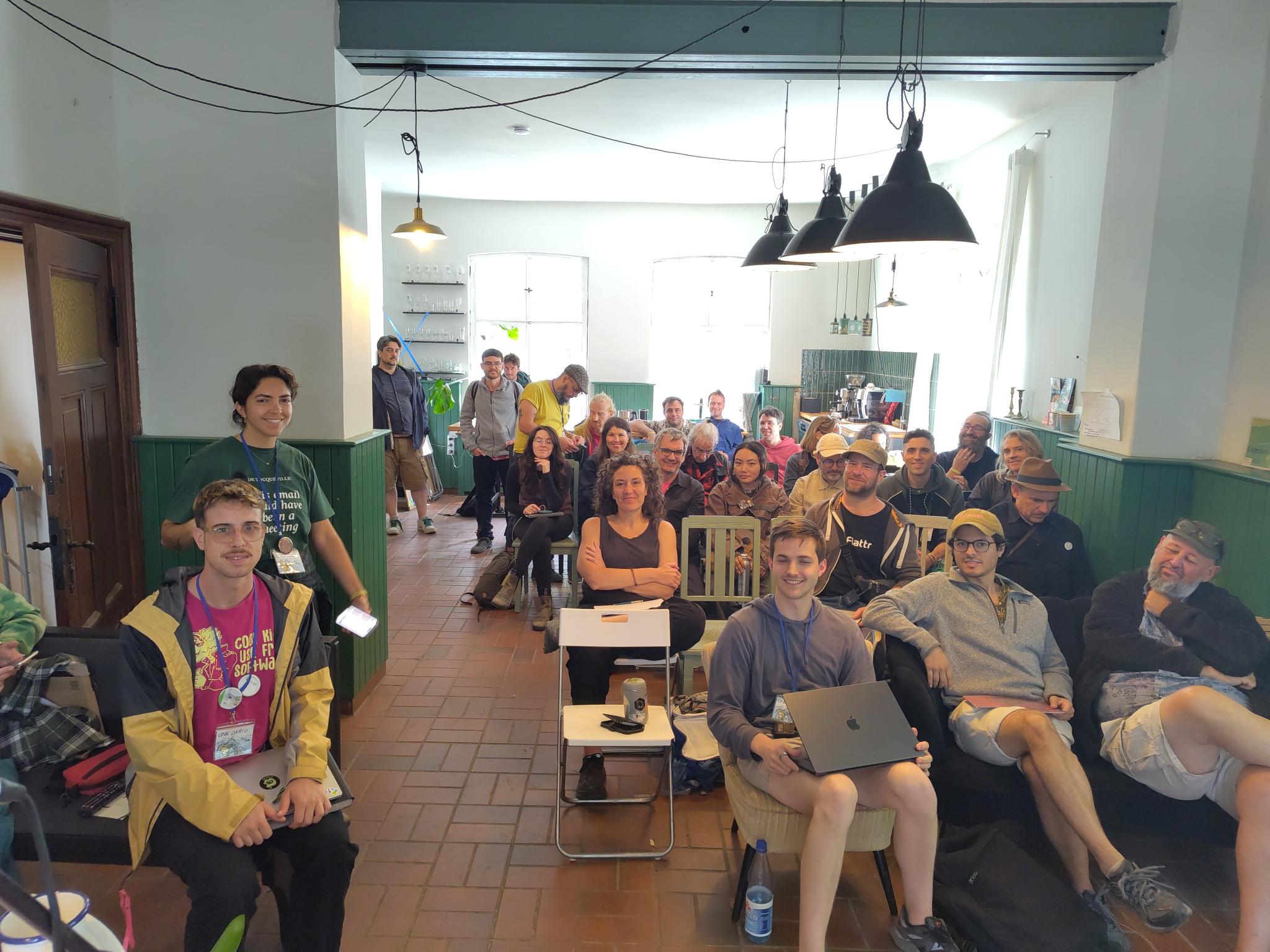
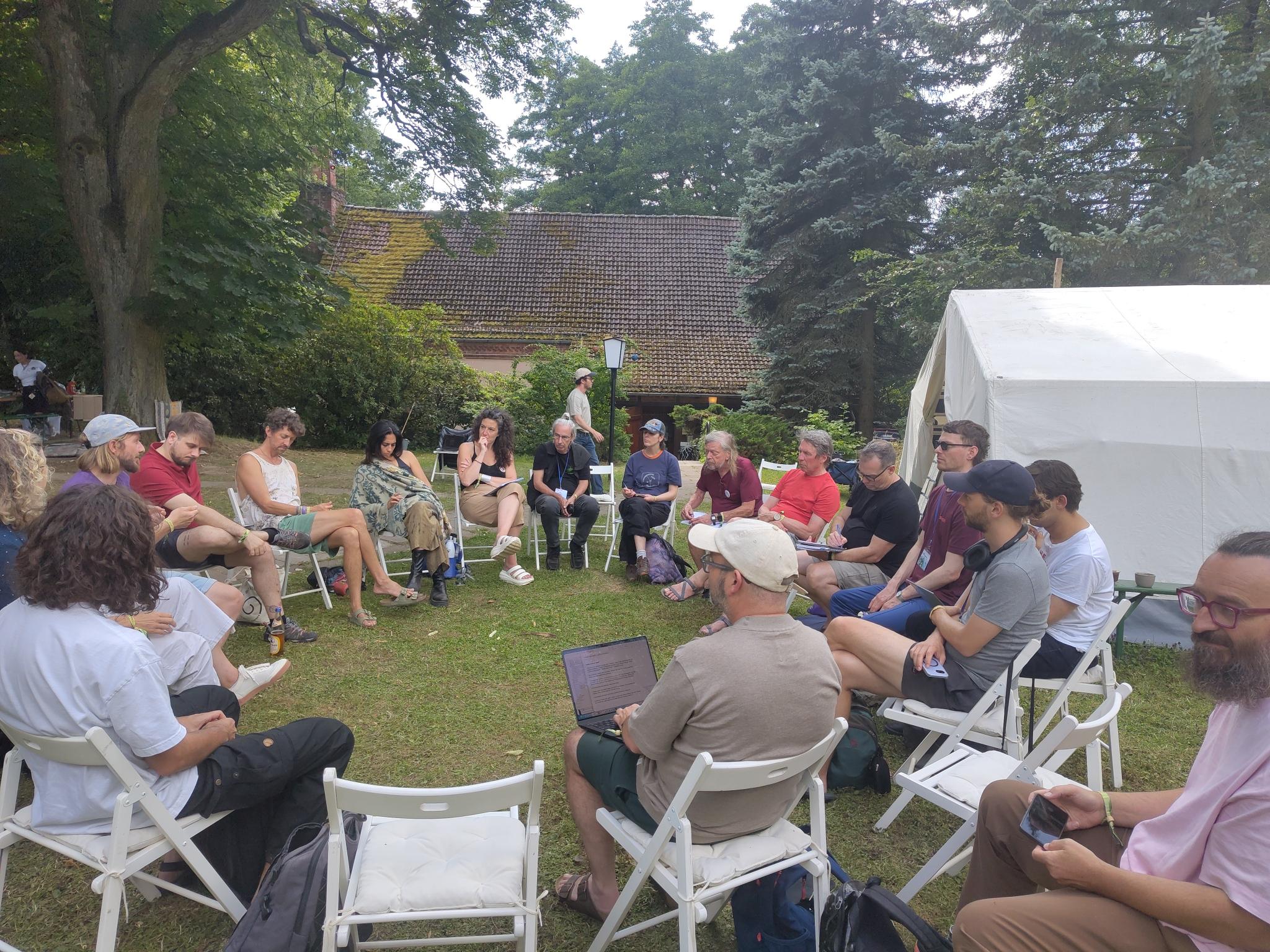 On Friday, Ela and Andreas facilitated a session on P2P financing and the solidarity economy, drawing on their own experience and prompting discussion about what it could mean for our own projects (session). Straight after, Olivier led a governance role-play (session): Martijn presented a project and walked a set of stakeholders — in a format inspired by baseball — through their asks and contributions. We then discussed what each stakeholder would bring to the DTF, and what stake in its governance they would like. The session generated rich input that will feed directly into the next phase of governance design.
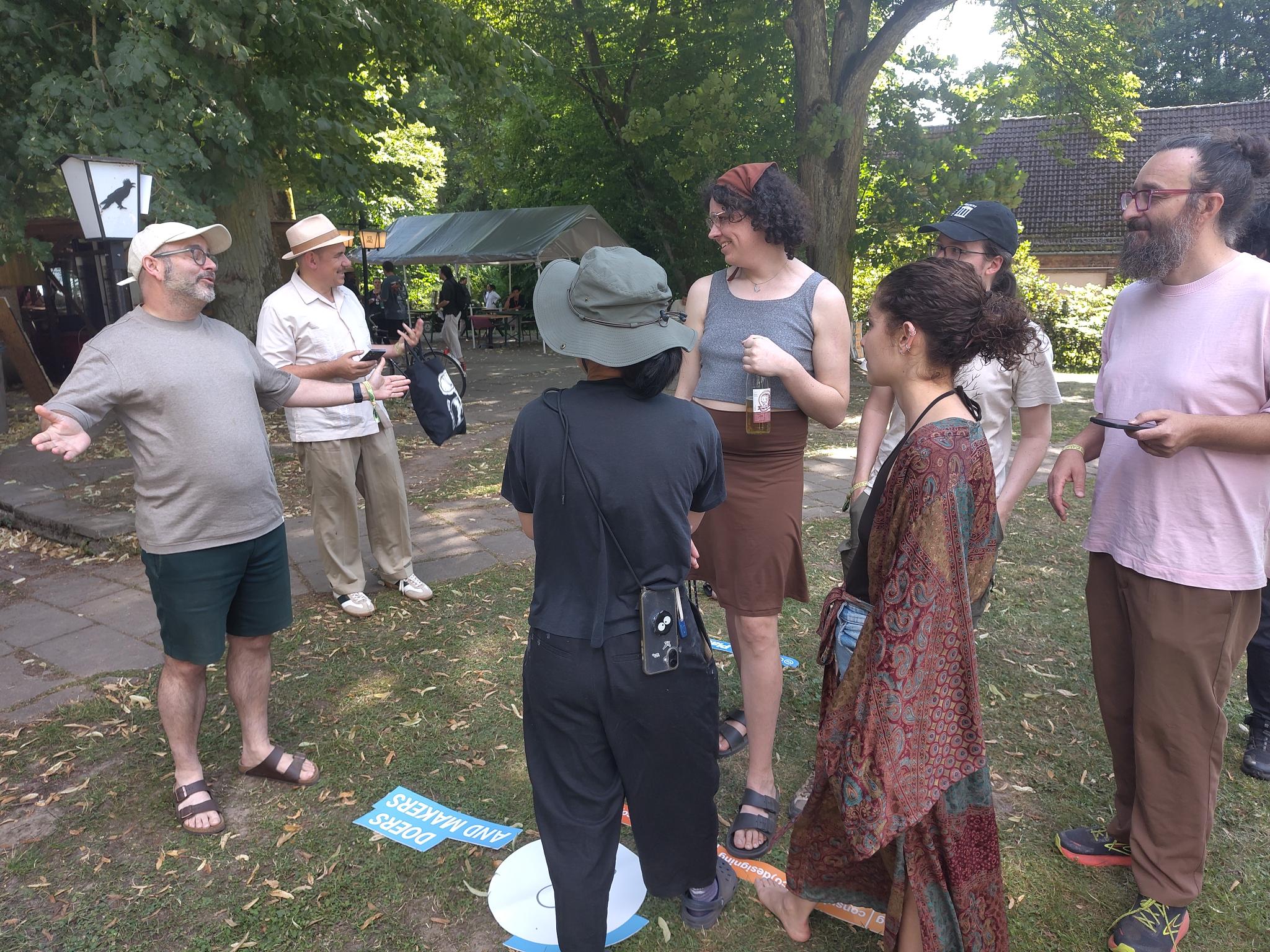
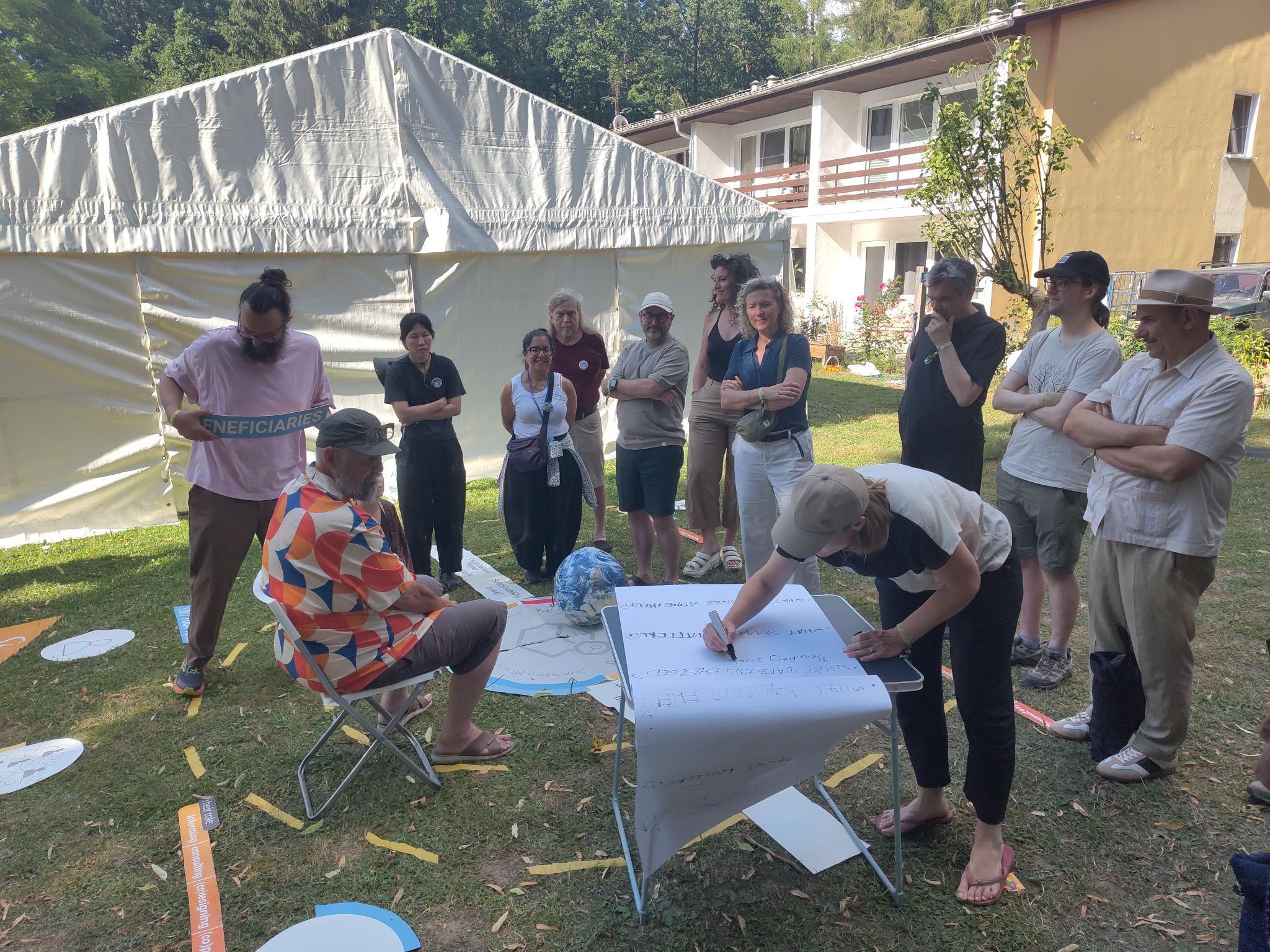
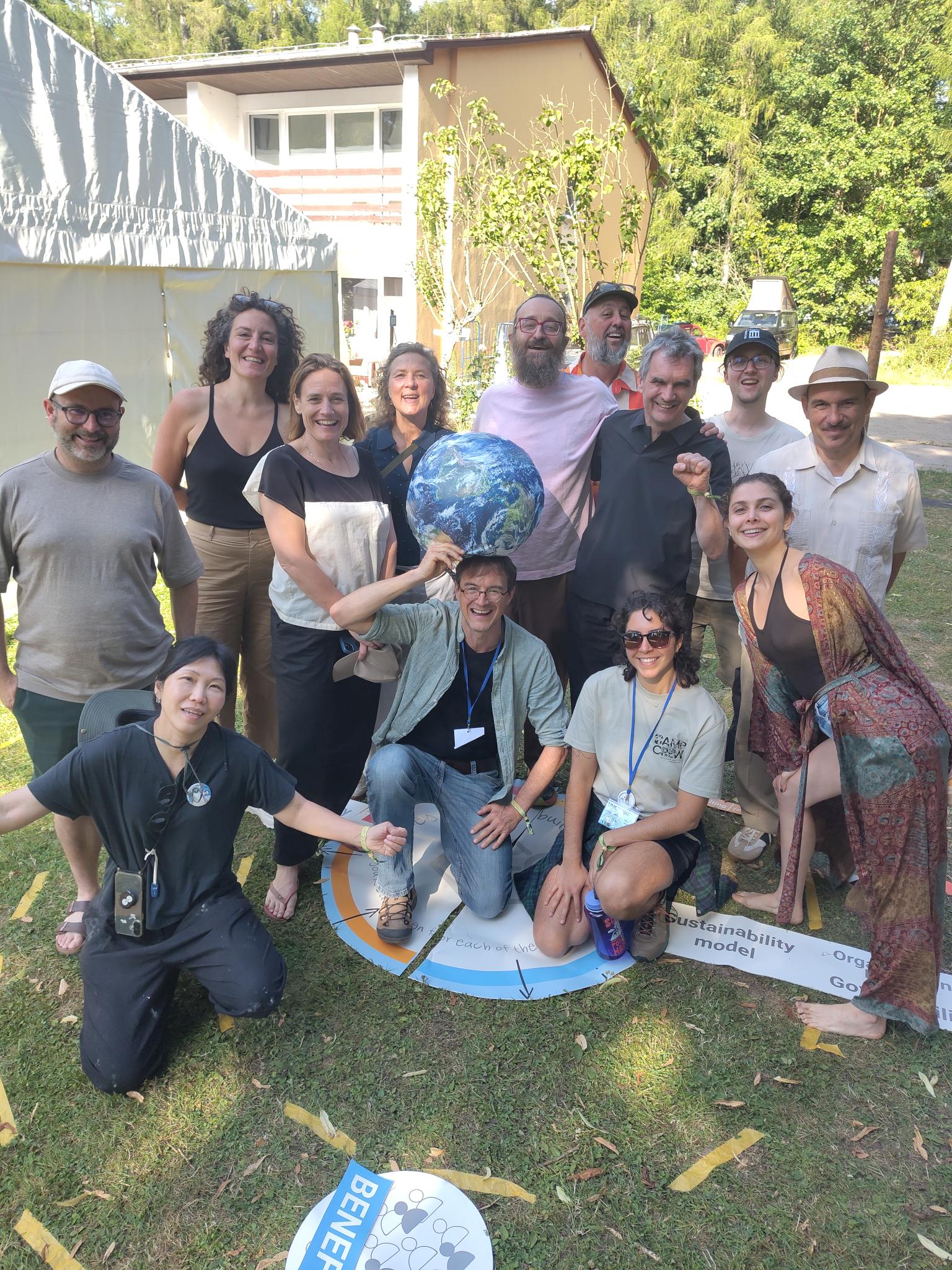
Together, these sessions leave us with the pieces needed to start collectively funding programmes — enabling communities in the cooperative social and solidarity economy, and communities most exposed within authoritarian tech spaces (social networks, cloud platforms), to build their own spaces: Connected Community Spaces and Collaborative Workspaces, as described in the case stories on the new DTF website. The first programmes being prepared are outlined in the Intro document, reachable via the QR code on our flyer. 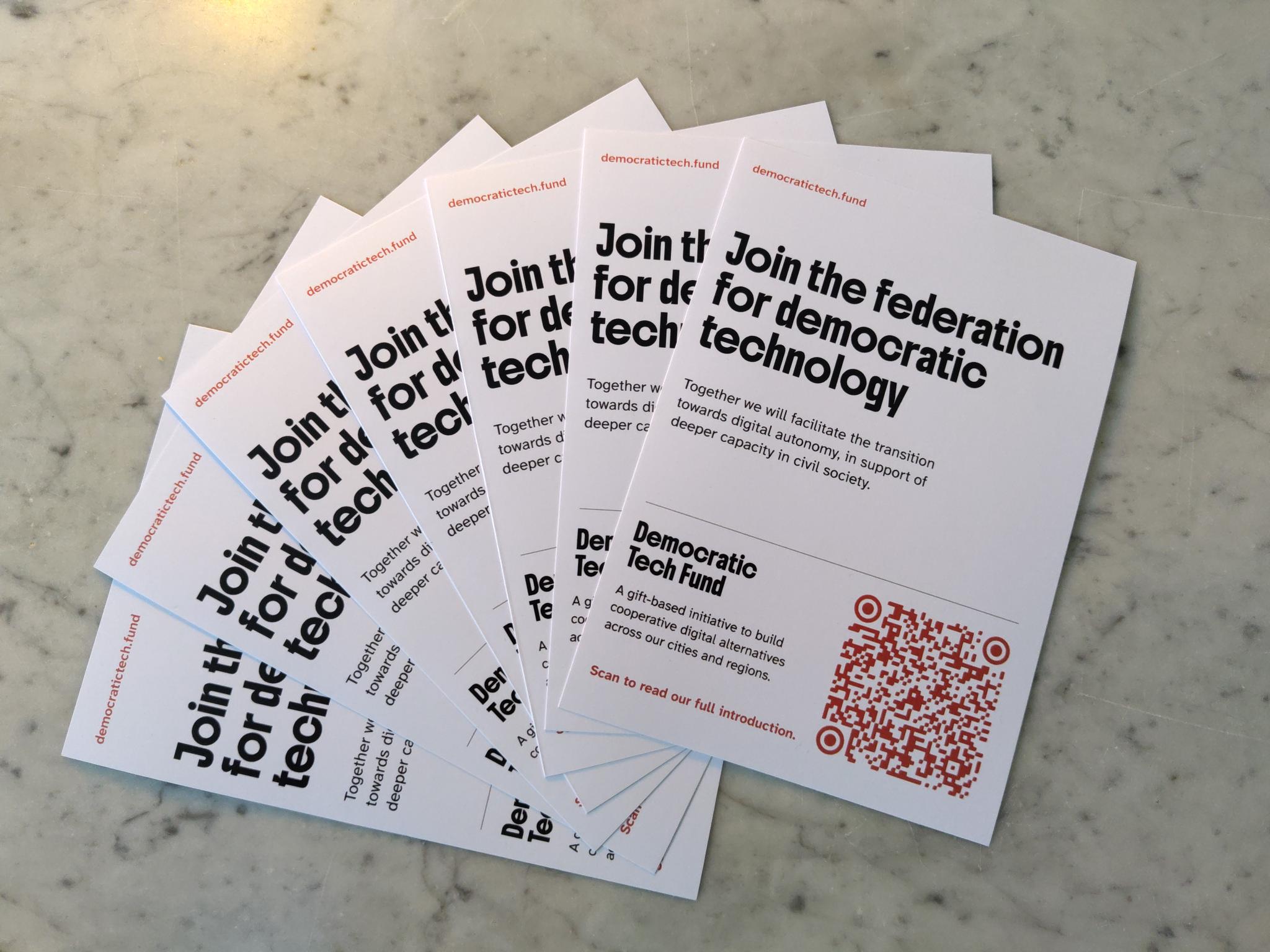
Lessons from Goteo, and from the field
Goteo’s experience is a stepping stone for the DTF. On Saturday, in the Sustaining Infrastructure Movements session, Olivier shared some of those lessons: over €25 million in donations distributed to thousands of collective projects, building resistance, collective memory and popular capacity across the social and solidarity economy. One of the DTF’s first programmes, led by Fundación Platoniq, is ARCHICARE — building collective archives for and by feminist collectives working on resistance, memory and care. 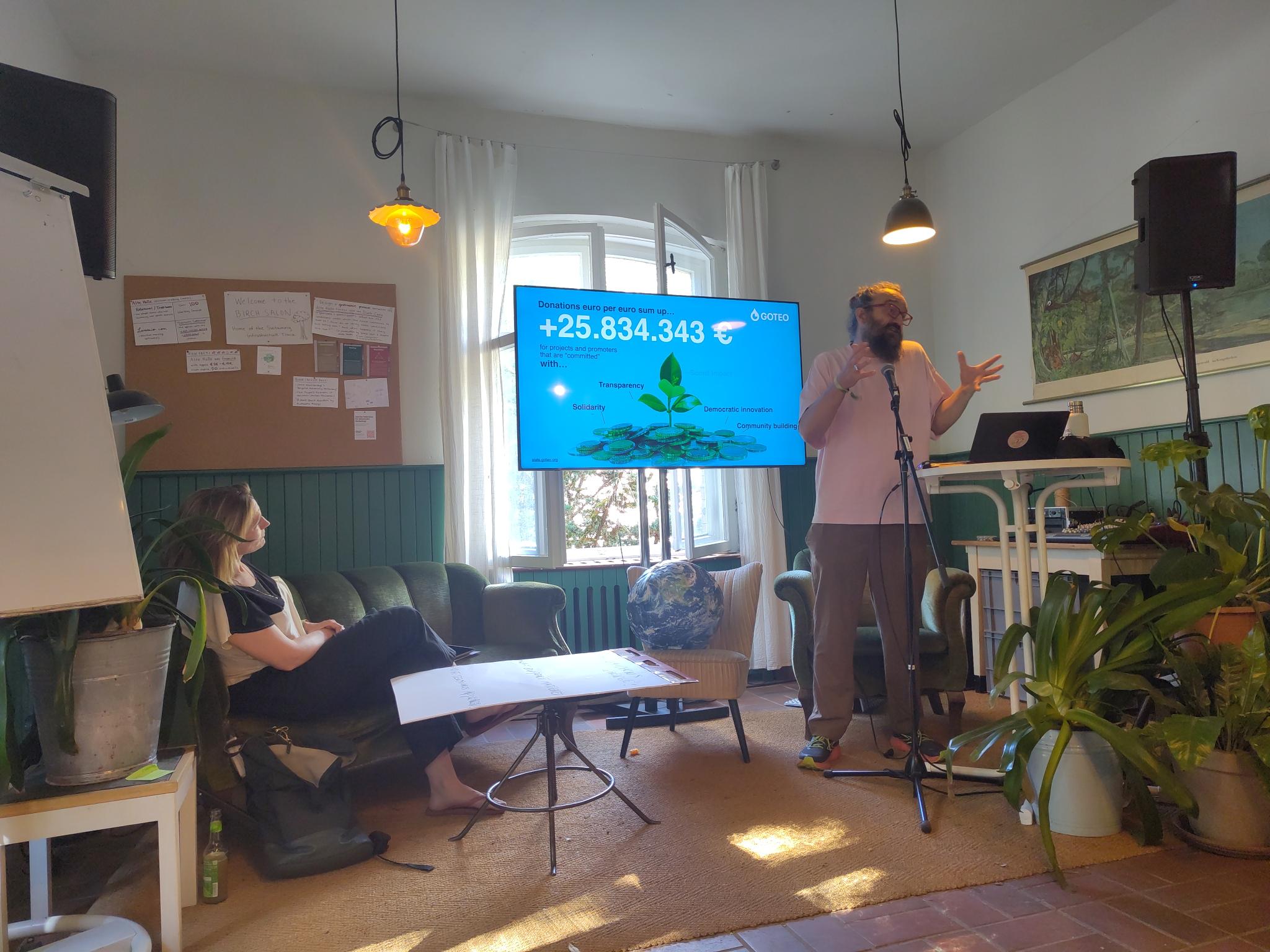
Conversations throughout the camp also turned to civic-public-private partnerships. Rather than the privatisation of public services often carried out under that name, several of us argued for civic and commons-based forms of collaboration that meet local needs directly and avoid extractive economics. As Andreas pointed out, more than 80% of local economic activity is currently extracted to shareholders far removed from the communities generating it — hardly a foundation for local sustainability in a time of ecological, social and political crisis. “Local First” came up repeatedly as a serious demand, with many at the camp working on the social and technical infrastructure — peer-to-peer, distributed or decentralised, owned by the users and communities of a given place — that could support it.
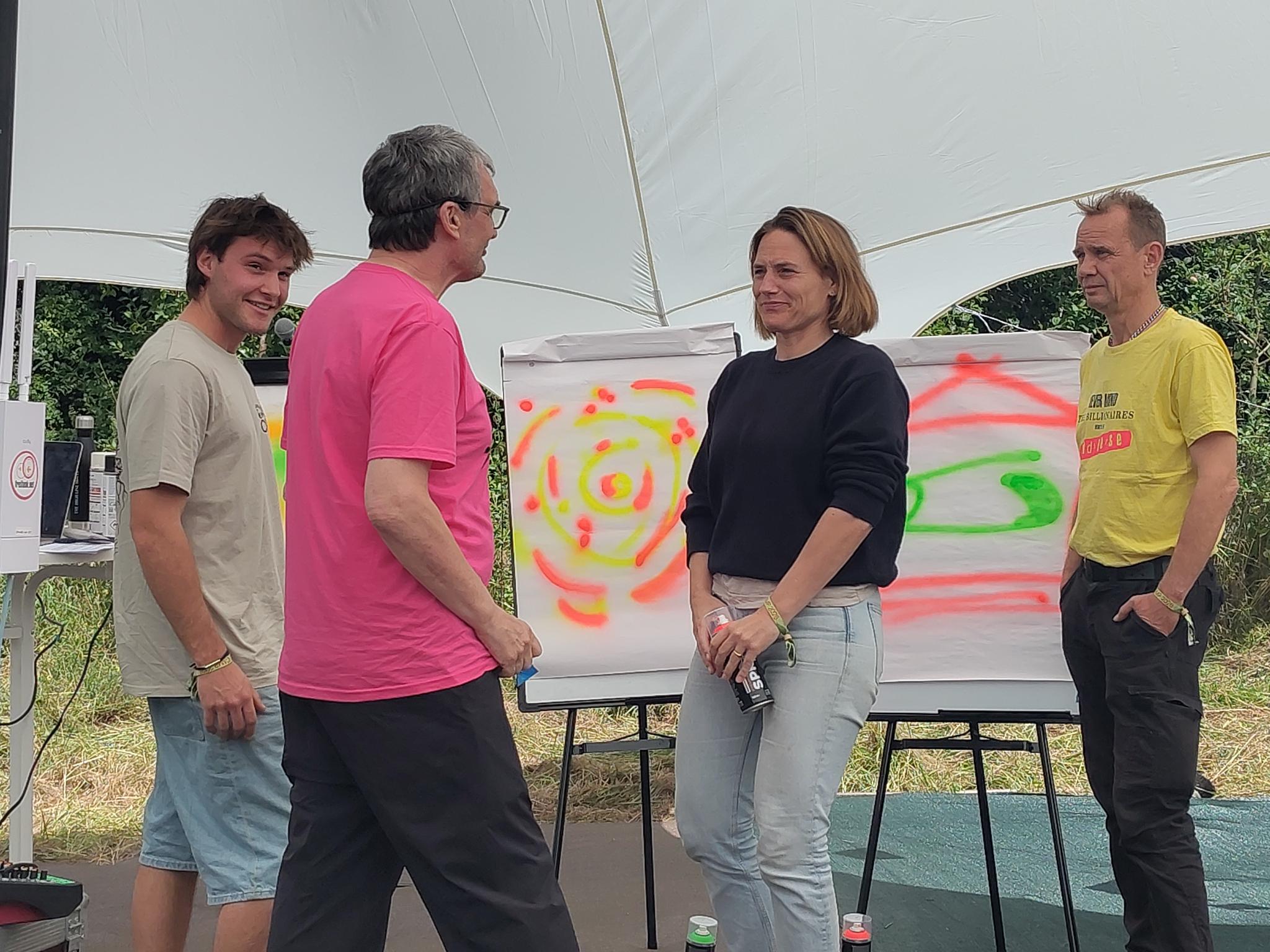 We also met many technologists building genuinely good tools on the assumption that “the users will come” — a risky bet, however solid the code or the open-source credentials. As Michael Foster of Newsmast Foundation put it, the answer isn’t to impose a single technical recipe on everyone either: rather than pushing Mastodon servers on every community, Newsmast has built a community-curated news feed on top of Mastodon that gives community media the reach and usability of well-funded commercial platforms (see the related use-case story on the DTF website). At the same time, “Not Invented Here” thinking does real damage: too often, new projects are started to solve problems that existing open-source tools already address, when a bit more networking and shared awareness could have avoided the duplicated effort.
That tension — translating real user needs into existing open-source solutions, acknowledging that change is hard, and finding ways to resource teams to drive it together with communities that want it — was a recurring theme. We closed one of the last sessions with the question: can we catalyse a decent movement? Decent values, decentralised architectures, and “good enough for now, safe enough to try” as a working pattern.
At the Demo Night Market we stood together with @fauno of Sutty and @iexos to represent the Co-op Cloud Federation - the network that shares the burden of deploying and maintaining around a hundred mature web applications. A very decent way to make reuse easier and avoid reinventing so many wheels.
Closing the camp
In the breakout time that followed, some started planning how to keep meeting, online and in person — possibly via a platform called Work Adventure — while others made music with improvised instruments. At the closing party, one of the better ideas of the week was to donate unused drink tokens to a box at the bar, so that anyone could collect a free drink.
Our thanks go to the Internet Archive and the Dweb team for organising such a well-run gathering, and for bringing it to Europe this year. We also want to thank the Department of Decentralisation (DoD) — the on-the-ground volunteer organisation that brought Freifunk and many other collective infrastructure projects together to keep the camp connected — and the C-Base community, whose Berlin space is well worth a visit for anyone wanting to play games in a spaceship among fellow hackers.
We need to stay connected to push back against authoritarianism, here, there and everywhere. Onwards, together.